Aquaponics
Fish + plants. One closed-loop ecosystem.
Aquaponics combines recirculating aquaculture and hydroponics into a single living system — water cycles between fish tank and plant bed indefinitely. We design, sell and teach systems based on the FAO small-scale aquaponics guide and the UVI commercial raft model.
Three actors. One nitrogen cycle.
Aquaponics is one of the most water-efficient and chemically simplest forms of food production known — once the system is biologically balanced, it runs on fish food alone.
Fish produce ammonia
Tilapia, koi or trout excrete ammonia via gills and waste. In a closed system that ammonia would quickly become toxic to the fish themselves.
Bacteria convert it
Two groups of nitrifying bacteria — ammonia-oxidisers (Nitrosomonas) and nitrite-oxidisers (Nitrobacter / Nitrospira) — convert ammonia first to nitrite, then to nitrate. This biofilter is the heart of any aquaponic system.
Plants love nitrate
Lettuce, basil, kale, herbs and even fruiting crops absorb the nitrate via their roots, cleaning the water for the fish. The cycle closes.
Source: FAO Fisheries Technical Paper 589 — Small-scale aquaponic food production (Somerville et al., 2014).
From backyard IBC to commercial raft
Each system ships with cycling instructions, plumbing layout and a six-week new-grower support window. Delivery and on-site commissioning available in Gauteng; nationwide for the IBC Backyard.
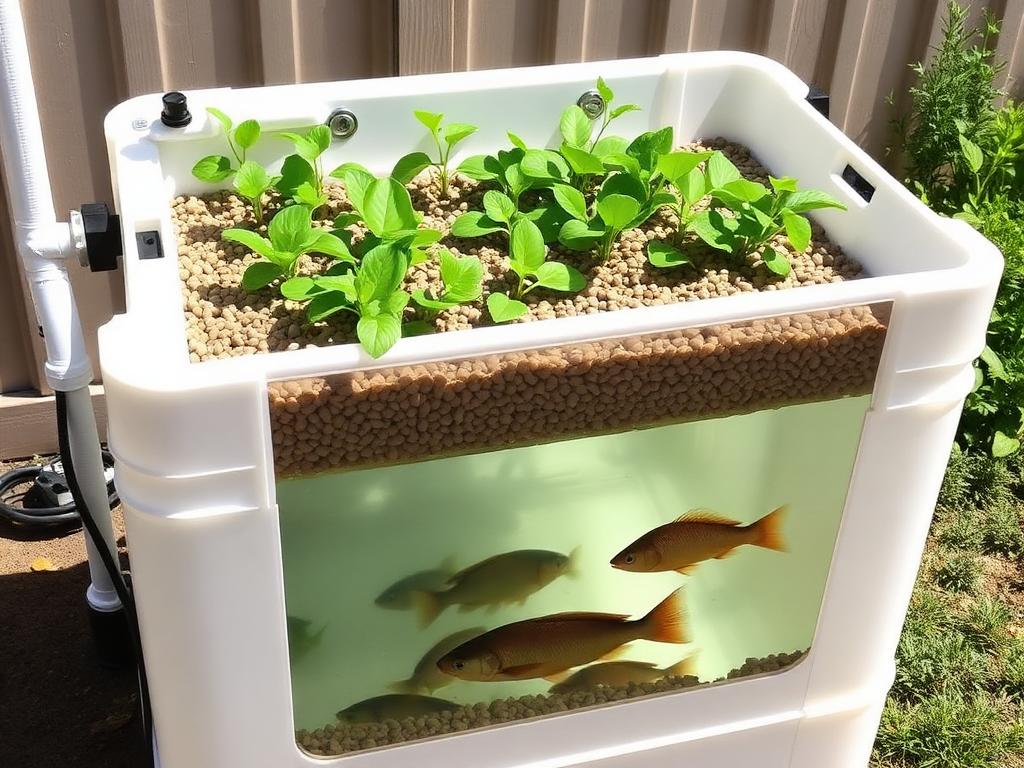
NaO IBC Aquaponics Starter (Backyard)
A media-bed aquaponic system built on a repurposed 1000 L IBC tote. Houses ~25 tilapia and grows leafy greens / herbs in a 600 L flood-and-drain bed.
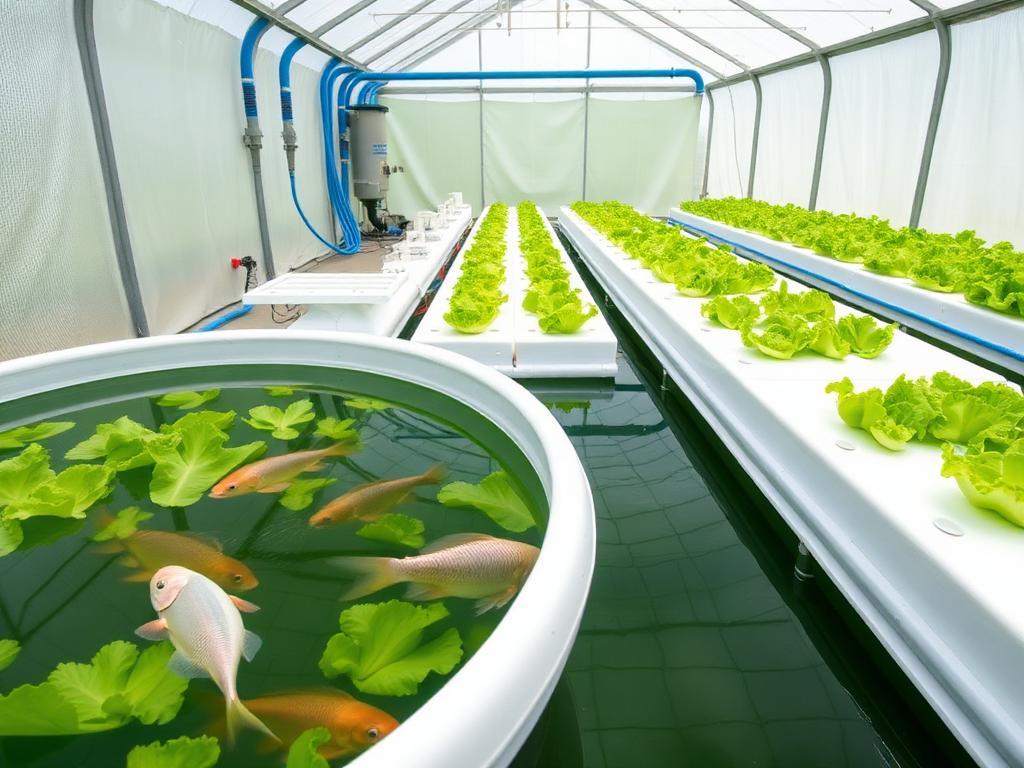
NaO Raft (DWC) Aquaponics Pro
A 6 m² floating-raft aquaponic system based on the University of the Virgin Islands (UVI) commercial raft design — scaled down for South African small commercial use.
Two crops. One footprint. ~90 % less water than soil.
In a properly cycled aquaponic system, fish and plants share a single body of water that is continuously recirculated and biologically purified. Published top-up requirements run at roughly 1–3 % of system volume per day — comparable to a closed hydroponic system, but with a protein crop included [FAO Tech. Paper 589, Somerville et al. 2014].
Commercial-scale UVI-type studies in tropical and subtropical conditions report tilapia growth rates in the range of 1.4–1.8 g/day at densities of ~60–80 fish/m³, with concurrent lettuce yields around 0.7–1.0 kg/m²/week in the same system volume [Rakocy et al., SRAC 454; FAO 589]. South African results vary with water temperature and cultivar.
Aquaponics is not easier than hydroponics — fish add a real welfare responsibility — but for growers committed to closed-loop, low-input food production, it is one of the most resource-efficient systems documented.
*Water-use reduction figures and growth/yield ranges above are drawn from FAO Technical Paper 589 (Somerville et al., 2014) and UVI / SRAC 454 (Rakocy et al.). Real-world results depend on climate, cultivar, water source and system design.
Aquaponic & Hydroponic courses
Practical, science-backed courses for hobby growers and commercial operators. Every aquaponic course is taught by instructors with hands-on UVI and FAO methodology experience.
Aquaponics Foundations
Set up your first IBC aquaponic system. Cycling, fish stocking, plant choices, and reading your water tests with confidence.
Commercial Raft Aquaponics (UVI Method)
Plan, build and run a UVI-style raft system: feed-rate ratios, swirl filtration, biofilter sizing and harvest-cycle planning.
Hydroponics 101
Set up your first home hydroponic system, mix nutrients confidently, and harvest fresh greens within weeks.
Advanced Nutrient Management
Master EC, pH and feeding schedules across NFT, DWC and tower systems. Calibrated against the NaO 3-part nutrient line.