Chief Scientist
Prof. Mmaditshaba
Rapatsa-Malatji
Chief Scientist at Nana Organics, leading the science behind our hydroponic and aquaponic work.

Science you can trace back to other scientists
Prof. Mmaditshaba Rapatsa-Malatji is an aquaculture scientist and academic with specialised expertise in fish nutrition, sustainable aquaculture systems and aquaponics research. She provides scientific and technical guidance on the integration of fish and plant production systems, with a focus on sustainability, productivity, water-use efficiency and practical application for South African producers. Her work is centred on advancing innovative farming systems that strengthen food security, support skills development and promote environmentally responsible agricultural production.
“Hydroponics is one of the most important agricultural shifts of our generation. It uses up to 90% less water than soil farming, eliminates the need for arable land, removes synthetic herbicides from the growing cycle and lets us produce nutrient-dense food right where people live — even in drought-stressed regions of South Africa. That is what sustainability actually looks like on the ground.”
“Our three-part nutrient range — MICRO, GROW and BLOOM — is the practical expression of that science. MICRO delivers the calcium, magnesium and trace elements every healthy root system depends on. GROW drives strong vegetative structure and leaf density. BLOOM unlocks flowering, fruiting and yield. Together they give South African growers professional-grade hydroponic results at a price that respects a household budget — and a planet that can't afford wasteful farming anymore.”
“Aquaponics and hydroponics aren't a luxury — they're one of the most water-efficient ways South Africa can feed itself. Our job at Nana Organics is to make science you can trace back to other scientists usable on a backyard budget.”
— Prof. Mmaditshaba Rapatsa-Malatji, Chief Scientist
Water is the medium of life — and the future of how we feed ourselves.
Every fish that swims, every seaweed that grows in the ocean and every root that drinks in a hydroponic channel is doing the same thing: taking what it needs from water. Soil is one delivery system for nutrients — but it is not the only one, and in a water-stressed country like South Africa it is no longer the most efficient. The science Prof. Rapatsa-Malatji practises — aquaculture, hydroponic plant nutrition and aquaponics — is the disciplined study of how to feed plants and fish through water itself, with less land, far less water and zero soil degradation.
Three disciplines, one closed loop
Each expertise area below is a strand of the same story — water as a precision delivery system for nutrition. Together they shape every product and system Nana Organics ships.
Aquaculture & Fish Nutrition
Life began in water — and water is still the most efficient medium we have for raising protein. The Prof.'s home discipline is designing feed and grow-out conditions that keep tilapia and catfish healthy, fast-growing and ethically raised on South African farms.
Hydroponic Plant Nutrition
Seaweeds and ocean crops have always thrived without a single grain of soil — fed entirely by what's dissolved in the water around them. Hydroponics brings that same principle to land: with MICRO, GROW and BLOOM dialled in for South African water, the nutrients in the water are all the crop ever needs.
Aquaponics Integration
If fish thrive in water and plants thrive in water, the next step is obvious — let them share it. Fish waste becomes plant food, plants polish the water back for the fish, and one closed loop produces two harvests with almost no waste.
Skills & Training
Translating peer-reviewed aquaculture and hydroponic research into practical curricula for South African producers, students and rural cooperatives — so the science leaves the lab and reaches the farm, the school and the backyard.
Learn the science directly — aquaculture, hydroponic nutrition and aquaponics.
The Nana Organics Training Academy turns Prof. Rapatsa-Malatji's research into three practical course tracks: Aquaculture Basics for healthy, productive fish; Hydroponic Plant Nutrition for getting the most out of MICRO, GROW and BLOOM; and Aquaponics Integration for running the closed loop end-to-end. Built for South African producers, students, and home growers.
How aquaponics actually works
One simple, repeating cycle: fish produce nutrient-rich waste, beneficial bacteria convert it into plant-available nitrogen, plants take up those nutrients and polish the water clean, and the clean water flows back to the fish. Nothing leaves the system.
1. Fish feed the water
Tilapia and African catfish are ammoniotelic — 75–90% of the nitrogen they excrete leaves the body as ammonia across the gills (not in the faeces). The widely cited engineering rule is ~30 g of total ammonia-nitrogen produced per 1 kg of feed fed per day. That ammonia is high in nitrogen but, in its raw NH₃ form, toxic to the fish themselves.
NRC (2011); Timmons & Ebeling (2013)
2. Bacteria & plants do the work
Two guilds of nitrifying bacteria — AOB (Nitrosomonas) and NOB (Nitrospira) — oxidise NH₄⁺ → NO₂⁻ → NO₃⁻. Each gram of ammonia-N converted consumes ~4.6 g of dissolved oxygen and 7.1 g of alkalinity. Plants then take up that nitrate directly: lettuce, basil and herbs as their primary N source, fruiting crops with a small Fe/Ca supplement.
Timmons & Ebeling (2013); Bittsánszky et al. (2016)
3. Clean water returns to fish
Polished water returning to the tank should be < 1 mg/L TAN, < 1 mg/L NO₂⁻-N and ≥ 5 mg/L dissolved oxygen. Top-up runs ~1–3% of system volume per day — total water use is roughly 90% lower than equivalent soil farming, with essentially zero nutrient discharge.
FAO Tech. Paper 589 (2014); Goddek et al. (2019)
What the science looks like in practice
From recirculating nutrient channels to closed-loop aquaponics, these are the kinds of systems Prof. Rapatsa-Malatji's research informs — and the kinds of results South African growers can reach with the Nana Organics range.
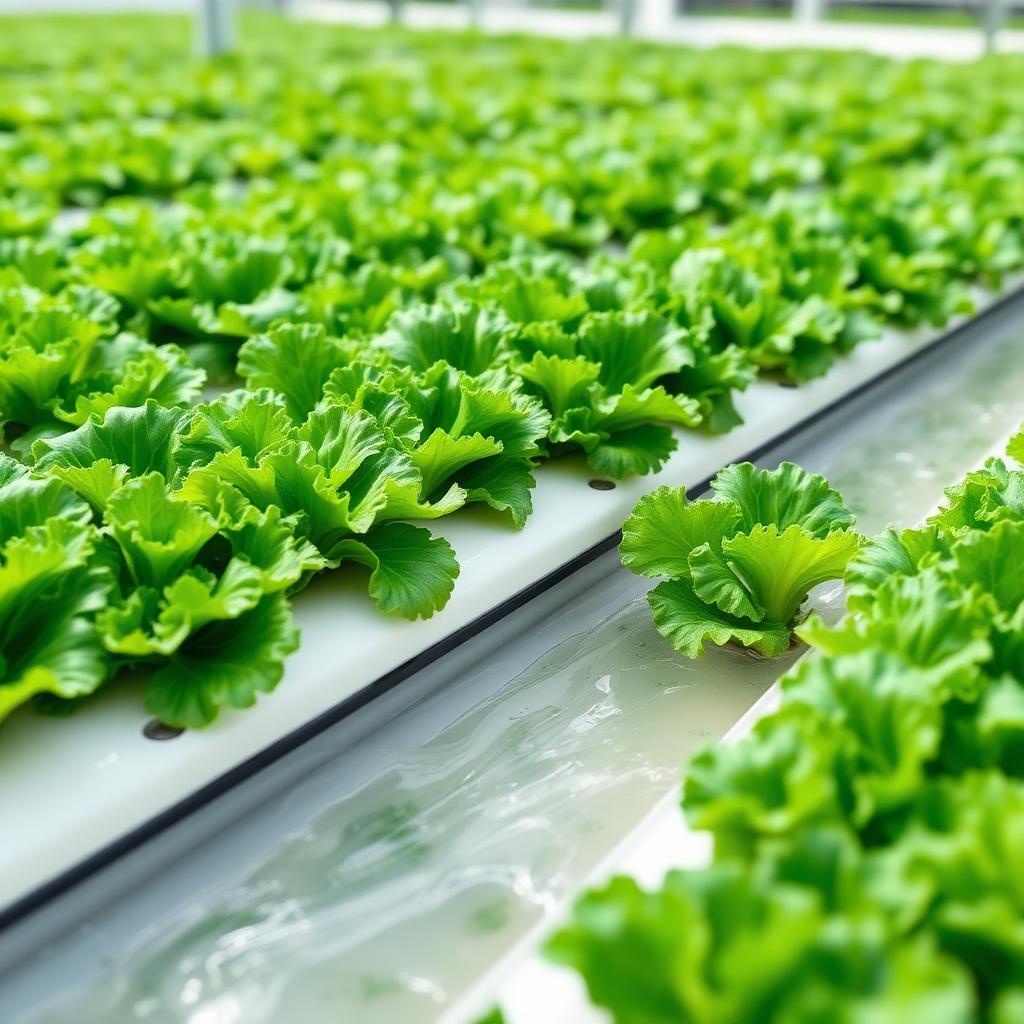 90% less water
NFT lettuce — full harvest on ~10% of the water soil farming needs.
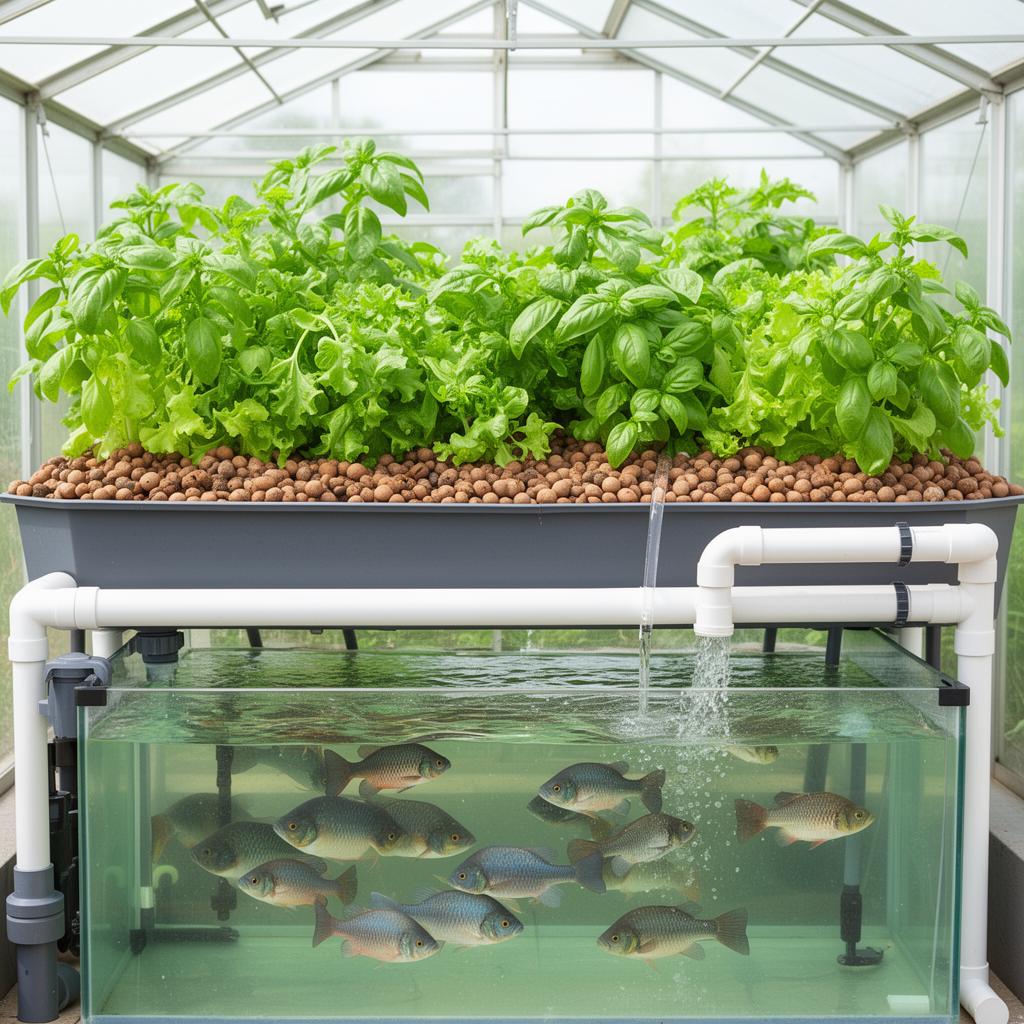 Zero-waste loop
Aquaponics in action — fish feed the plants, plants clean the water.
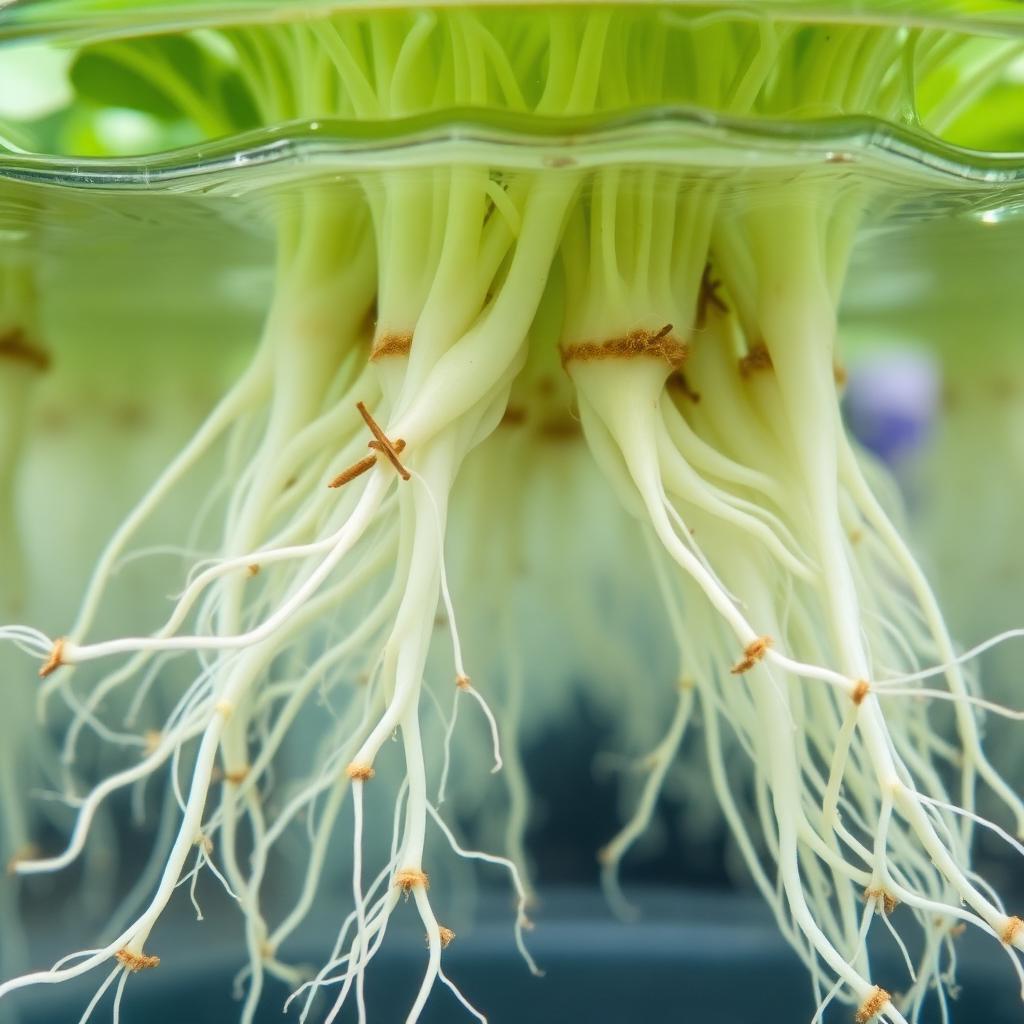 Root-zone first
Roots in MICRO + GROW + BLOOM — clean, white, oxygen-rich.
The disciplines behind the bottle
Prof. Rapatsa-Malatji's work spans fish nutrition, aquatic ecology and integrated aquaponic systems. Below each discipline is the short, copy-and-paste playbook we actually use on a farm — the numbers, the order of operations, and what 'good' looks like.
Fish nutrition & growth
Feed formulation, protein utilisation and growth performance in tilapia and African catfish — the foundation of profitable, ethical aquaculture in South Africa.
Target numbers
- Tilapia fingerlings (1–30 g): 35–40% crude protein
- Tilapia grow-out (30 g → harvest): 28–32% crude protein
- African catfish grow-out: 35–42% crude protein
- Feed 2–3% of body weight / day, split into 2–4 meals
- Target FCR ≤ 1.6 (tilapia) / ≤ 1.2 (catfish)
Do this weekly
- Sample-weigh 30 fish every 2 weeks; recalculate ration from new biomass.
- Adjust pellet size as mouth gape grows (crumble → 2 mm → 4 mm).
- Stop feeding 24 h before grading, transport or harvest.
- Log feed in / fish weight out weekly — that is your real FCR.
Source: NRC (2011) Nutrient Requirements of Fish & Shrimp; FAO SOFIA 2024.
Aquatic ecology & water quality
How nitrogen, oxygen and trace elements move through living water — the science that decides whether a system thrives or stalls.
Target numbers
- Dissolved O₂ ≥ 5 mg/L (never below 3)
- Temperature 26–30 °C (tilapia) / 25–30 °C (catfish)
- pH 6.8–7.2 (aquaponic compromise zone)
- Total ammonia (TAN) < 1 mg/L · Nitrite < 0.5 mg/L
- Alkalinity 80–120 mg/L CaCO₃ for stable nitrification
Do this weekly
- Test pH, DO and temperature daily; TAN + NO₂⁻ + NO₃⁻ weekly.
- Dose KOH or Ca(OH)₂ in small steps to hold pH (never > 0.3 / day).
- Replace 1–2% system volume daily for top-up and salt control.
- If TAN spikes: cut feed by 50% until the biofilter catches up.
Source: Timmons & Ebeling (2013); UVI/SRAC 454; EPA water-quality criteria.
Integrated aquaponic systems
Pairing fish and plant production into one closed loop: maximising yield per litre while eliminating the waste streams of conventional farming.
Target numbers
- Feed-rate ratio: 60–100 g feed / m² raft / day (leafy greens)
- Feed-rate ratio: 80–120 g feed / m² raft / day (fruiting crops)
- Fish : plant tank volume ≈ 1 : 2 (DWC) or 1 : 1 (media bed)
- Hydraulic retention 1–2 h through grow beds
- Top-up water ≤ 1.5% of system volume / day
Do this weekly
- Size the biofilter to convert all daily TAN (≈ 0.03 × feed in g).
- Stage plant beds so 1/3 is at harvest each week — keeps NO₃⁻ stable.
- Flow order: mechanical filter → biofilter → sump → grow beds → fish tank.
- Audit kg fish + kg produce per m³ water per year — that is the score.
Source: Rakocy et al. (2006) UVI; Goddek et al. (2019) Aquaponics Food Production Systems.
The five rules every Nana Organics product is held to
Not slogans — working rules. Each one comes straight out of Prof. Rapatsa-Malatji's lab notebook and decides what we will and won't ship.
Evidence first
If it isn't in the literature or in the data, it isn't in the bottle.
Water-positive
Every formula and system must use dramatically less water than the soil alternative.
Backyard-affordable
Professional-grade science at a price a household budget can actually carry.
Teach as we sell
No bottle leaves without the knowledge to use it well — that's why the Training Academy exists.
Local before global
Tuned for South African water chemistry, climate and crops first, then everything else.